

Introducing Nonprofit Board Generative Thinking to Your Governance Toolkit
Board meetings frequently default to routine oversight, with trustees spending most of their time reviewing past performance, approving committee reports, or tracking financial metrics. While fiduciary responsibility is a cornerstone of effective board governance tools, it only scratches the surface of what a leadership team can offer. To truly guide an organization forward, leaders must look beyond compliance and engage in a different type of intellectual work.
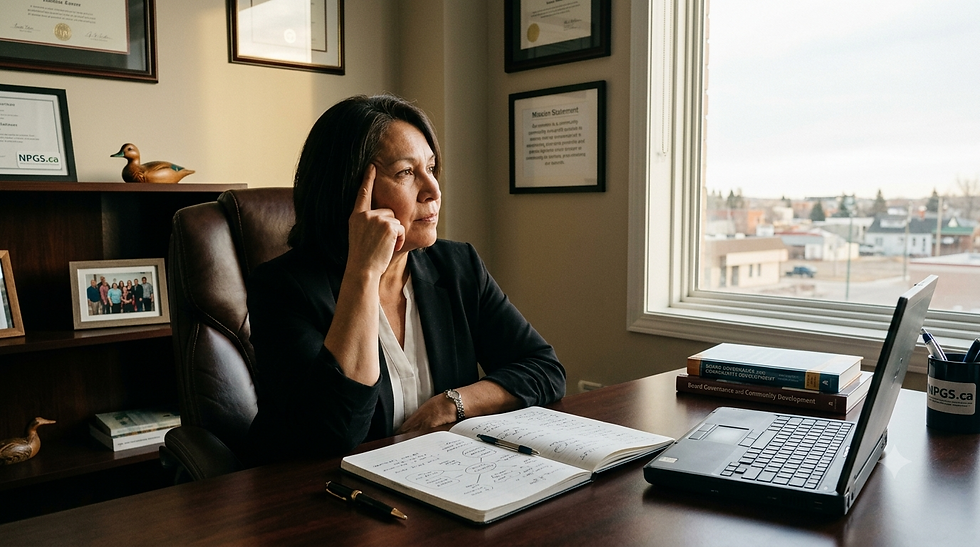
This is where nonprofit board generative thinking becomes vital. It shifts the conversation from merely managing the present to actively anticipating and shaping the future.
Nonprofit Board Generative Thinking: Understanding Generative Governance
Generative thinking is about seeing patterns, identifying key questions, and looking at complex situations from multiple viewpoints. It represents a pivot away from simply approving pre-packaged plans or monitoring staff performance. Instead, it requires trustees to continually reassess the current social, economic, and political environment and ask how those shifting dynamics affect the organization’s long-term future.
Rather than looking at a problem through a purely technical or operational lens, a board using this approach seeks to clarify organizational identity, core values, and strategic priorities. The goal is not necessarily to produce immediate solutions, but rather to frame issues in a way that surfaces the most meaningful challenges and opportunities for the nonprofit.
Cultivating the Right Inquiries
Shifting a board into a generative mindset requires moving past routine yes-or-no questions. It demands open-ended, probing inquiries that challenge long-held assumptions and invite creative reflection.
When your leadership team is facing major transitions or setting strategic direction, here are some powerful generative questions to ask during your sessions:
What headline would you most like to see about this organization in five years?
How would we operate differently if we were a for-profit organization instead of a charity?
What specific parts of our current operating model are truly viable long-term?
How do we need to change as individuals for this new initiative to succeed?
How should we make decisions as a group when operating in an highly uncertain environment?
By weaving these discussions into regular meeting agendas, a board can transition from a passive oversight body into a powerful engine for strategic insight.


